
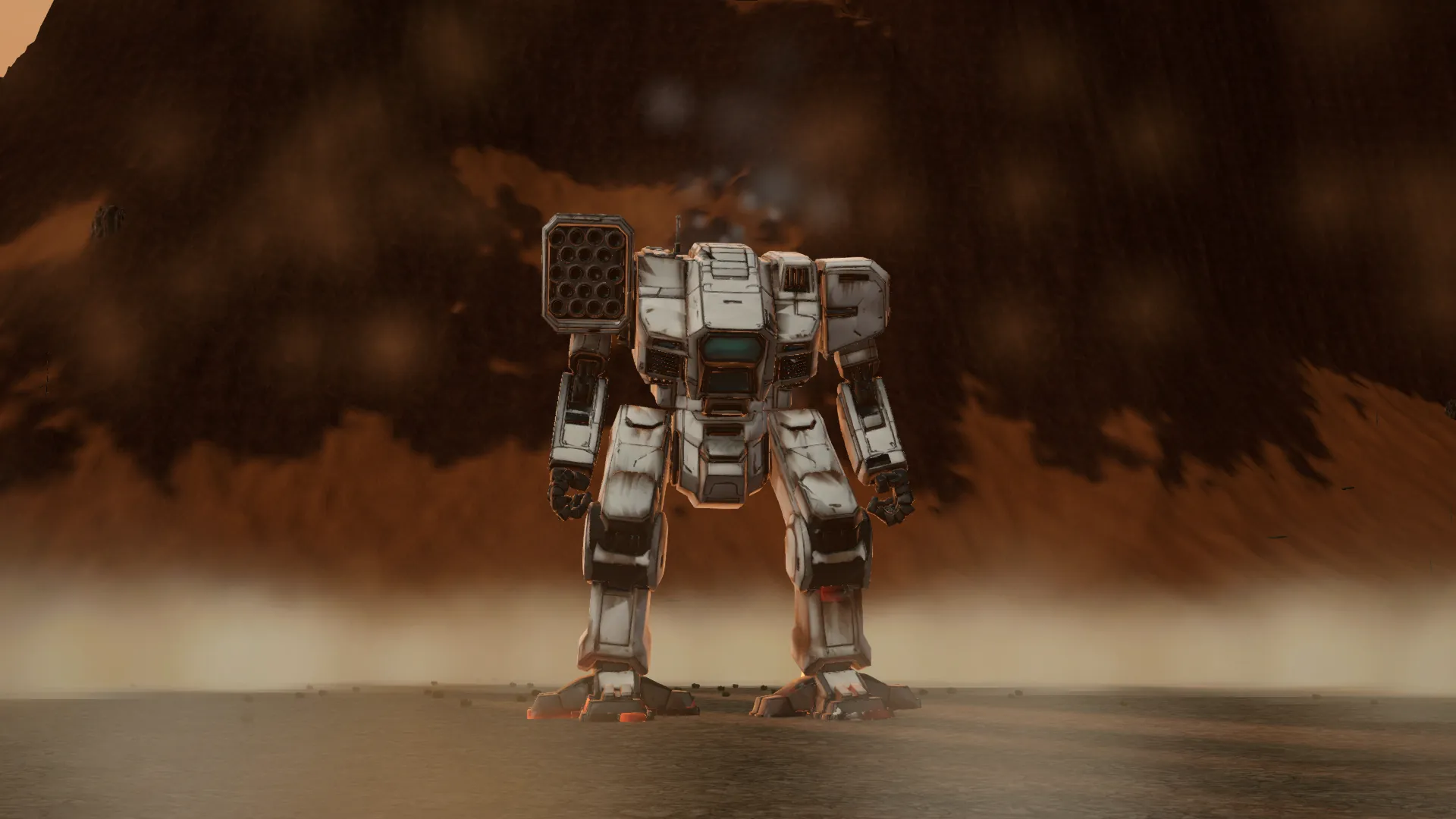
The Reach
The Physics
Nothing on The Reach floats, and nothing is faked. Don't read about it. Drop it, fly it, load it, ram it, fire it.
- Gravity
- 9.81 m/s²
- Pressure
- 29.92 inHg
- Sound, 20 °C
- 343 m/s
- A day
- 25.4 hours
- A year
- 481 Earth days
- The crossing
- 0.130 c
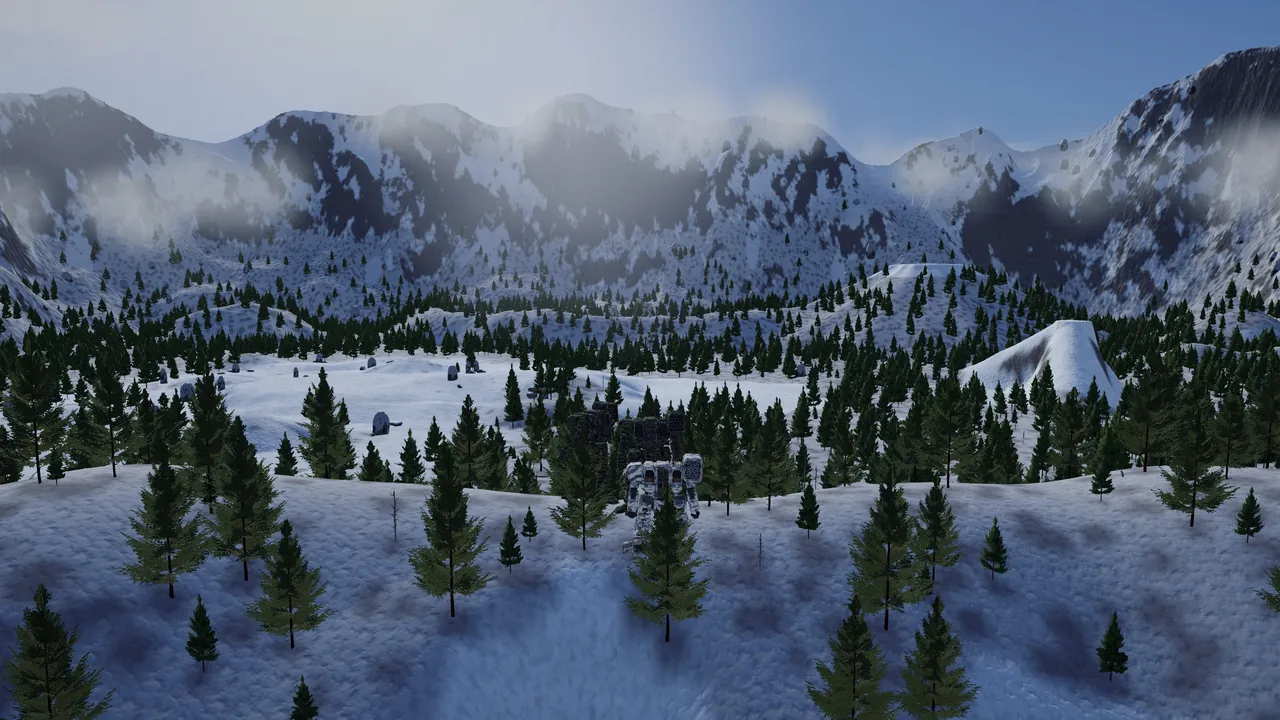
01 Gravity
Drop it
Pull the rail up. Let go.
- From
- 30 ft
- Arrives at
- 30 mph 13.4 m/s
- Each leg takes
- 104 of 150
A hard landing. Both legs take it.
One gravity runs the whole game: the DART-20's rounds drop by it, and the fifty-ton machine you are sitting in falls by it. The Reach pulls about as hard as Earth does, so the game runs Earth's figure. Anything lighter only feels floaty.
The arithmetic
Arrive at 6 m/s or slower, a drop of about 6 feet, and the legs take it. Every meter per second past that costs each leg 14 of its 150, so an unpowered drop from 47 feet takes both legs off.
Arrival speed = √(2 × g × height)
Each leg takes (arrival speed − 6 m/s) × 14
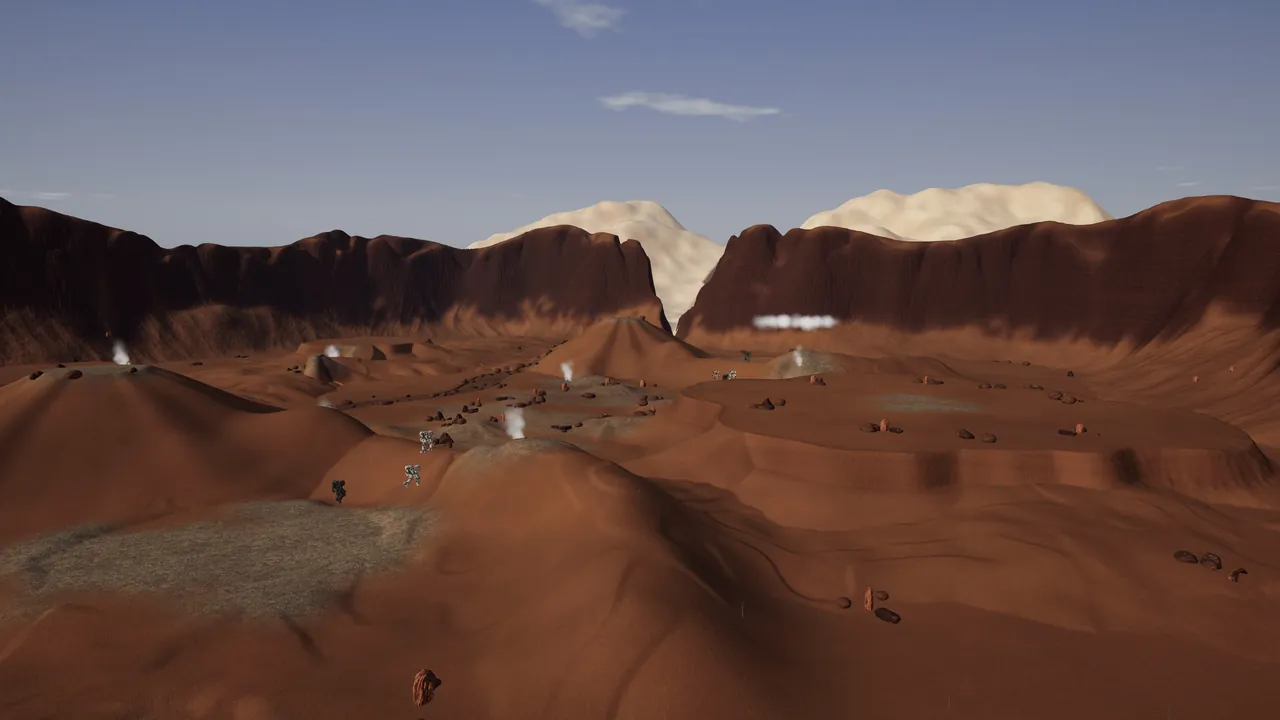
02 Flight
Fly it
Hold the jets. Stay up as long as you dare.
- Height
- 0 ft
- Ceiling
- 150 ft
- Best flight
- —
Hold the button. Let go to come down.
The six lights are your landing: they read your radar altimeter against what is left in the tank. Climbing raises what you owe, and burning lowers what you have. Run out of lights, or overheat up there, and it is your legs.
The arithmetic
The jets push the VIGIL up at 14 m/s, about 2,760 feet a minute. Once you leave the ground you keep the heading and speed you had at liftoff; this demo lifts off standing. The torso still turns, so you can fly over a fight and shoot down into its back.
A flight-control governor caps the climb at 150 feet. Over the last 40 feet it bleeds the thrust away, so the VIGIL settles at its ceiling instead of striking it.
Coming down, an auto-flare lights the jets at 16 feet and brakes you to a 4 m/s touchdown. It costs fuel and no heat, and it needs a tank with something in it and a reactor that is not overheated.
The lights price the trip down: what is left in the tank after flying down at 5 m/s and flaring at the bottom. They go out before the tank does. They promise a flown descent, so a good pilot can still cut the jets and let the flare catch them, for less gas than the lights charge.
- The tank
- 30 s of thrust the cold gas slowly replenishes on the ground: 75 s from empty, and a new life fills it
- Heat
- +7 a second the same heat the guns make, and thrust stops all cooling
- This load
- +7.0 a second
- Overheats in
- 14.3 s
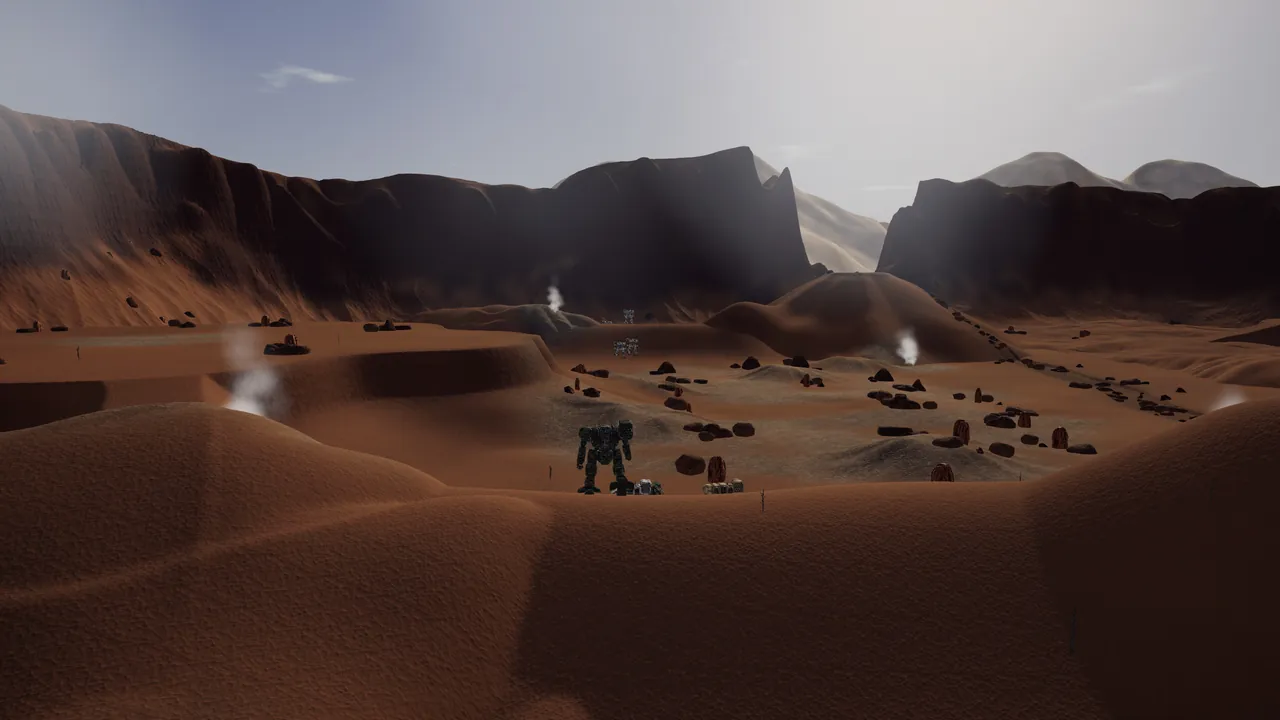
03 Weight and slopes
Load it. Climb.
Bolt on weapons. Tilt the hill. Hold walk.
101,200 lb 83% of its payload
- Top speed
- 40.0 mph
- Cooling
- 70%
- Jet ceiling
- 113 ft
- Jets hot in
- 10.7 s
- On this hill
- 29.2 mph
- Right now
- 0.0 mph
- Climbed
- 0 ft
73% of its 40 mph on the flat.
Weight is not a number on a card. It reaches into speed, cooling and flight, and every step on a hill lifts the whole machine. The faint VIGIL is the same machine, empty, on the same hill.
The arithmetic
An empty VIGIL weighs 76,000 lb. Loaded to its maximum operating weight it is 106,240 lb, and you can load it past that outside Ranked.
- Speed. Top speed slides from 45 mph empty to 39 at maximum weight. Past it, each extra percent of payload costs another 0.28 mph.
- Cooling. A heavier machine sheds heat worse, and the loss grows with the square of the load: 70% of its cooling with the starter kit, 57% at maximum weight.
- Flight. The jets lift what you weigh against the empty machine: 102 ft for the starter kit with jets fitted. The jets are a center-torso module that weighs 6,000 lb itself.
- Inertia. From a standstill it takes about two and a half seconds to reach full speed, and a second and a half to stop.
- Slow. Below 45°, speed falls with the slope, and heavier is slower still. Sampled 6 meters in front of the feet.
- Slip. From 45° the feet lose their grip. Push on and you slide back at 2.5 m/s. Let go and you stop.
- Stall. At 65° the legs cannot reach the next step. It is a wall, and weight does not move it.
Speed on a slope = flat speed ÷ (1 + k × sin(slope)2.5)
k = 3.5 + 2.3 × the share of payload carried
04 Water
Wade it
Raise the water.
- Depth
- 9.0 m
- Wading speed
- 8 mph
- Air left
- 10 s, once it is under
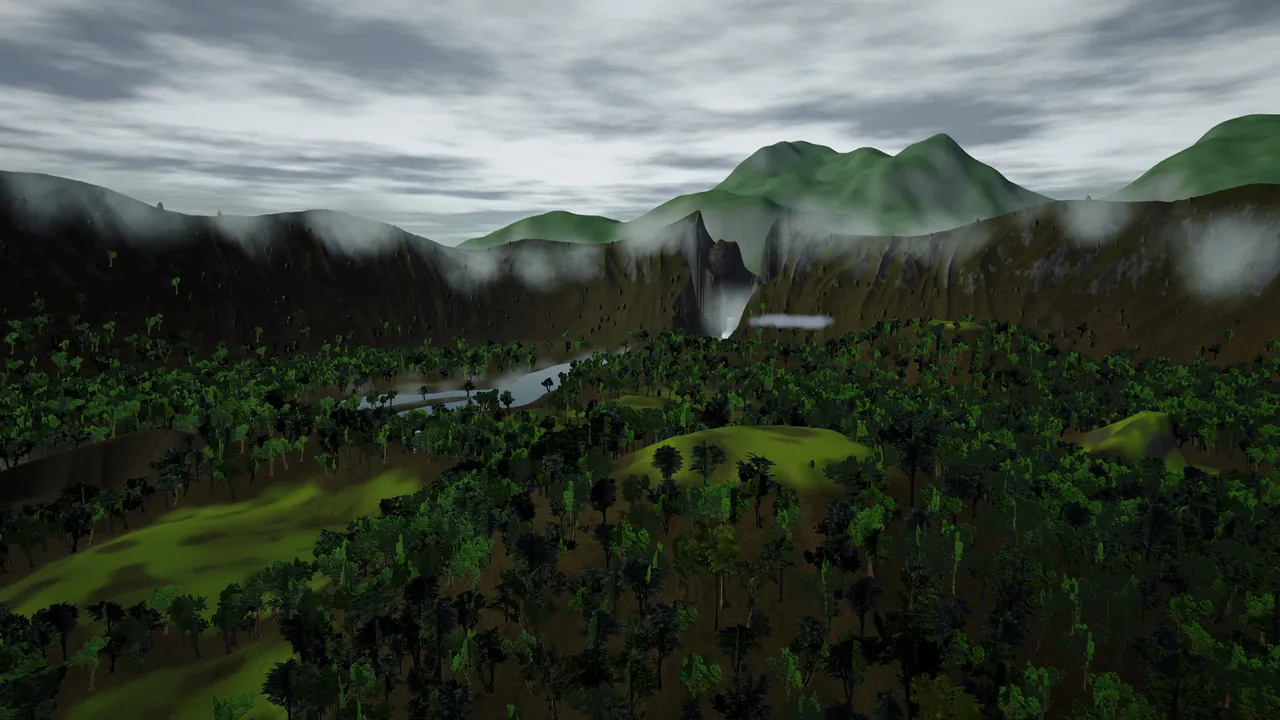
Water drags on the legs, and drag climbs with the cube of your speed, so the deeper it is the slower you wade: about 16 mph a meter deep, 13 at two meters, 10 at four, and 8 at nine, waist deep. Go wholly under for ten seconds and the VIGIL is lost.
The arithmetic
Wading speed = ∛(400 ÷ depth in meters) m/s
05 Collisions
Ram it
Pull the near VIGIL back. Let go.
- Your charge
- 40 mph
- Closing
- 40 mph
- You take
- 61 of 200
- It takes
- 61 of 200
Knocked down. Two seconds to stand, then two when nothing can put it down again.
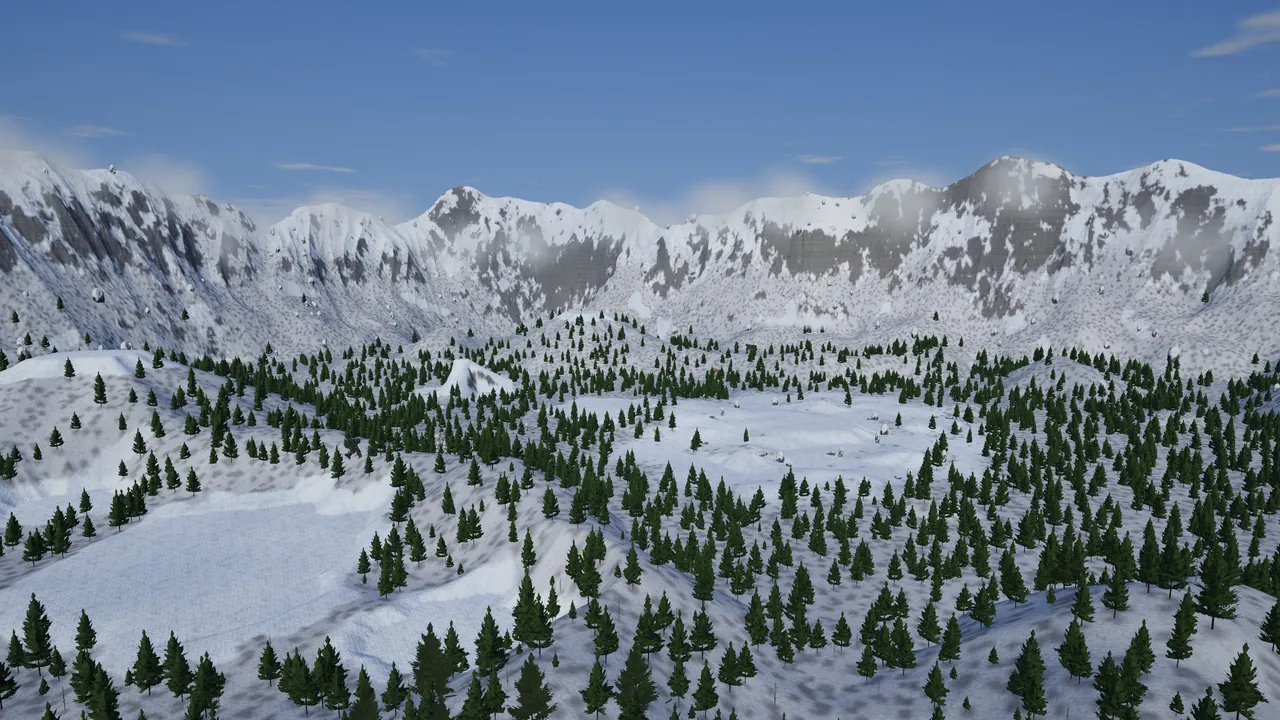
The server settles every collision the same way for every pilot. Damage comes from the energy of the hit: twice the speed, four times the damage, and both machines pay.
The arithmetic
Reduced mass = m₁ × m₂ ÷ (m₁ + m₂)
Ram damage ∝ reduced mass × closing speed², split by the other mech's share of the weight
- Two starter-kit VIGILs, one standing. 15 to each at 20 mph, 61 to each at 40. The front plate is 200.
- A shove is a shove. Below 3 m/s of closing speed, about 7 mph, nothing is damaged.
- Behind is worse. A ram from behind lands on the rear plate, 150 points against the front's 200.
- Momentum knocks you down. Measured along the line of contact: if the other mech's is half again yours, you go over. A mech standing still has none, so any real charge puts it down.
- Getting up. Two seconds down and standing, then two seconds when nothing can knock you over again.
- Teammates push. They never damage you and never knock you down.
06 Ballistics
Fire it
Lay the sight high. Lead the wind. Fire.
- Falls
- 127 ft low
- Hold
- On bar 2
- Wind
- 12 ft downwind
- Hits
- 0 of 0
Drag the picture to lay the sight, then fire.
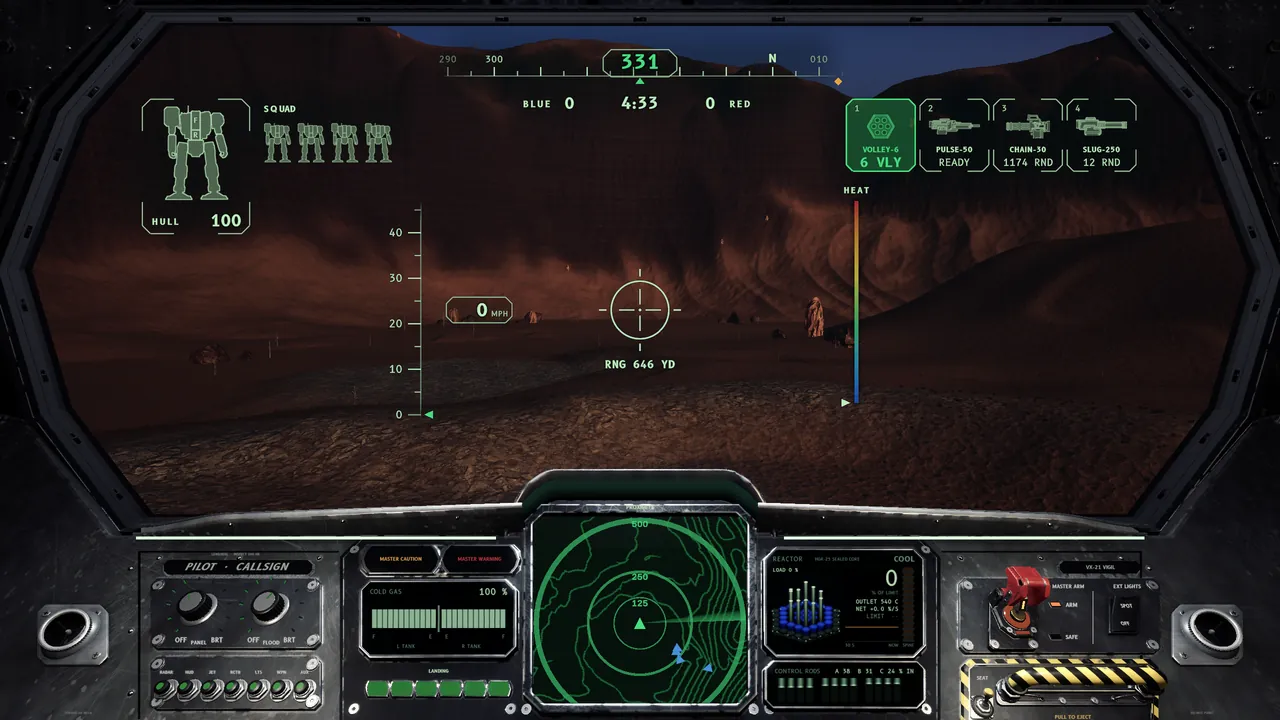
The long gun's rounds obey gravity and the wind. The autopilots fight under the same physics: when they miss, it is their aim, never different rules.
The arithmetic
DART-20 rounds leave the muzzle at 267 m/s and are zeroed at 300 meters, 328 yards. Past that they drop below your line of sight, so at range you hold over, walking the target up the scope's ladder: at 1,000 yards, put the second bar on the target. The ladder's first bar sits 31.2 milliradians below the center and the second 42.3.
Drop = ½ × g × R × (R − Z) ÷ v²
R the range, Z the zero, v the muzzle velocity
Crosswind turns a fast round by a fixed angle, so the miss grows with range. A headwind or a tailwind does nothing sideways.
In the game a DART-20 shot is settled the moment you fire. Here the round flies at its muzzle velocity so you can watch it; the drop and the drift are the same numbers. The sight is a diagram, not the game's reticle, though its three bars sit where the reticle's first three do, and the side view stretches height so the arc can be seen.
One wind, eight guns
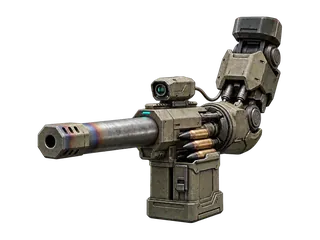
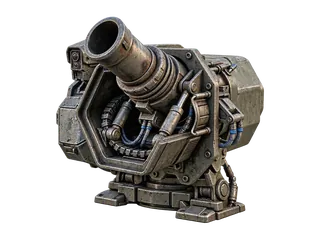
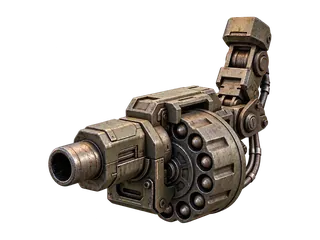
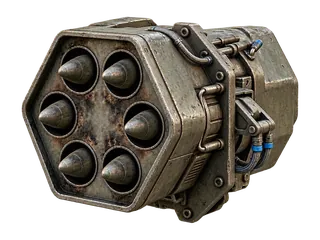
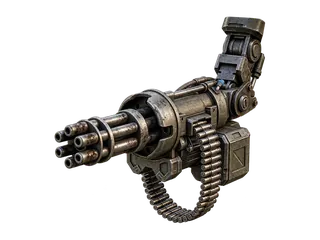
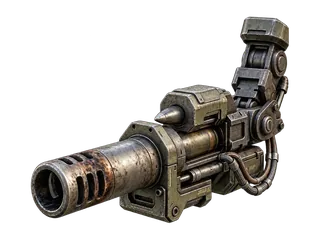
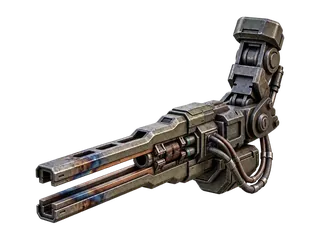
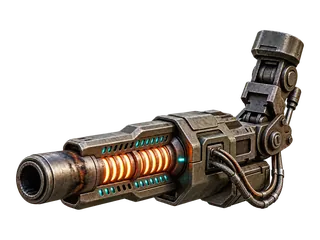
The mortars commit at the trigger. A THUMP-82 or BREACH-275 shell flies to the ground point you aimed at and does not track. Nothing warns the target but the shell itself.
07 Sound
Hear it late
Sound on. Drag it nearer or farther. Fire.
- Distance
- 600 m · 656 yd
- Heard after
- 1.75 s
- On the clock
- 0.00 s
- Air
- 20 °C · 68 °F
- Humidity
- 70%
- Sound speed
- 343 m/s
Light is there at once. Sound crosses the air at about 343 m/s, and the air soaks up the high notes on the way, so a far shot arrives as a dull thud rather than a crack. A hot dry desert and a cold wet storm sound different at range, because they are.
The arithmetic
Speed of sound = 331.3 × √(1 + T ÷ 273.15) m/s
What the air takes ISO 9613-1, from frequency, temperature and humidity. The readout is where it has taken 6 dB, half the sound's strength
The report here is made in your browser to show the delay and the dulling; it is not the game's own recording.
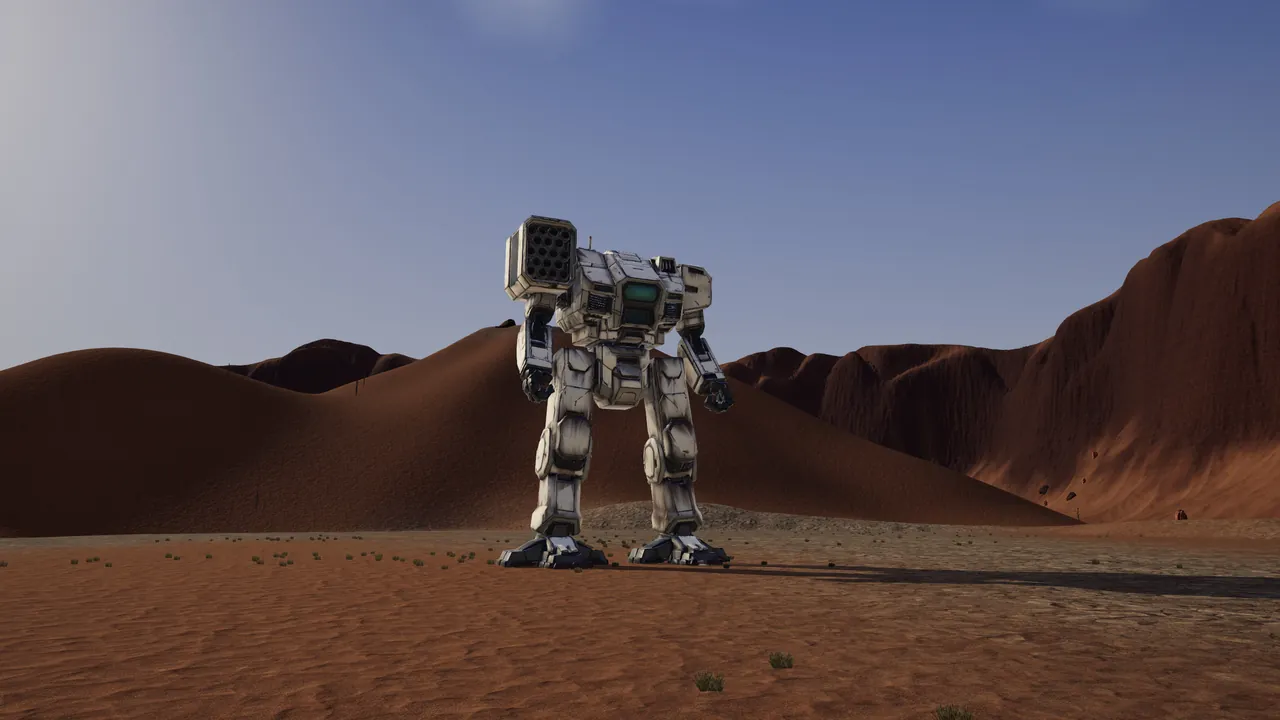
08 The world
Run a day
Drag the sky sideways.
- Day
- 1
- The Reach's clock
- 9.5 of 25.4 h
- The war's clock
- 15:30
- Noon, on the war's clock
- 18:42
The day is 25.4 hours long. The war keeps Earth's 24-hour clock anyway, on a world that does not keep it, and nobody aboard is going to fix that.
The survey
The Reach orbits Alpha Centauri A, a star a little heavier than the Sun, from a little farther out than Earth sits from ours. Heights are in feet above MSL: Mean Standard Level, the surveyed surface on which the standard atmosphere is defined. Pressure keeps rising below it, so a basin can sit below zero.
- Star
- Alpha Centauri A about 1.1 times the Sun's mass
- Orbit
- 1.24 AU 1.24 times Earth's distance from the Sun
- Year
- 481 Earth days 455 of its own days
- Axial tilt
- 21° Earth's is 23.4°
- Gravity
- 9.81 m/s² about 1 g, so the game runs Earth's figure
- At MSL
- 29.92 inHg · 15 °C 1,013.2 hPa, the standard day
- With height
- −1.98 °C per 1,000 ft up to 36,089 ft
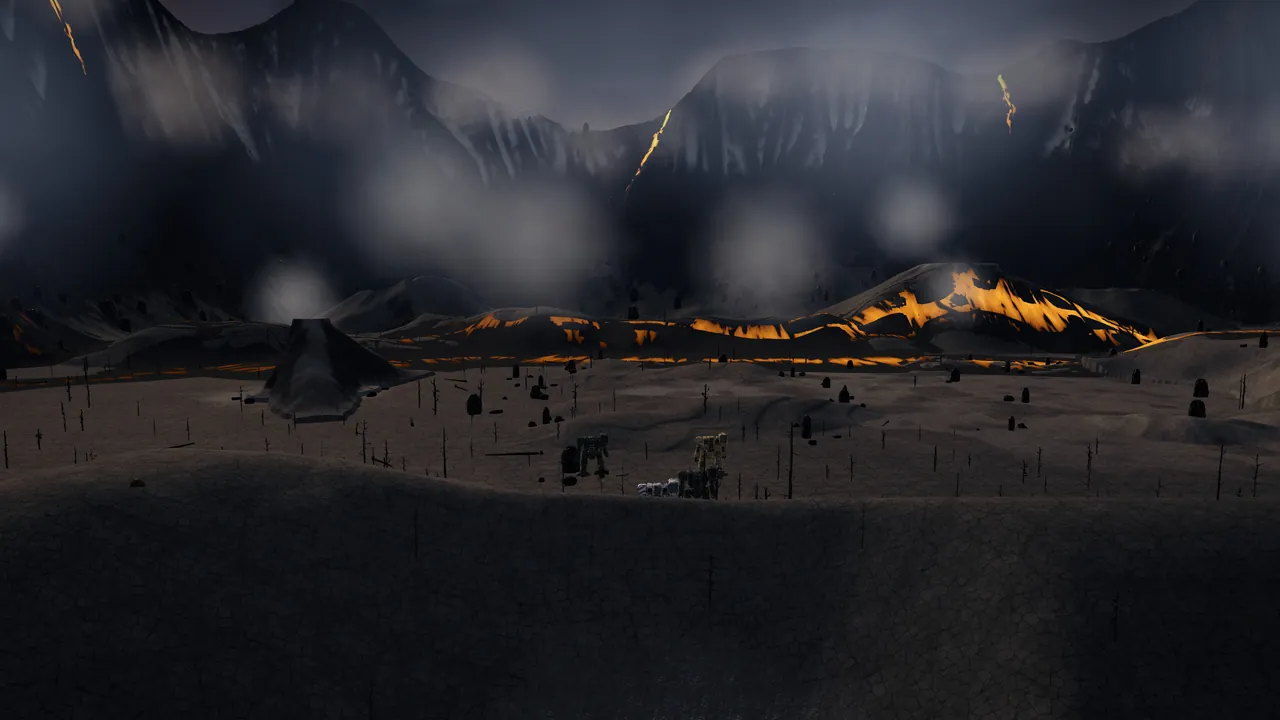
The light here is drawn on a picture from the game, at the equinox. The game's sky does not run this clock in a battle.
What the air is made of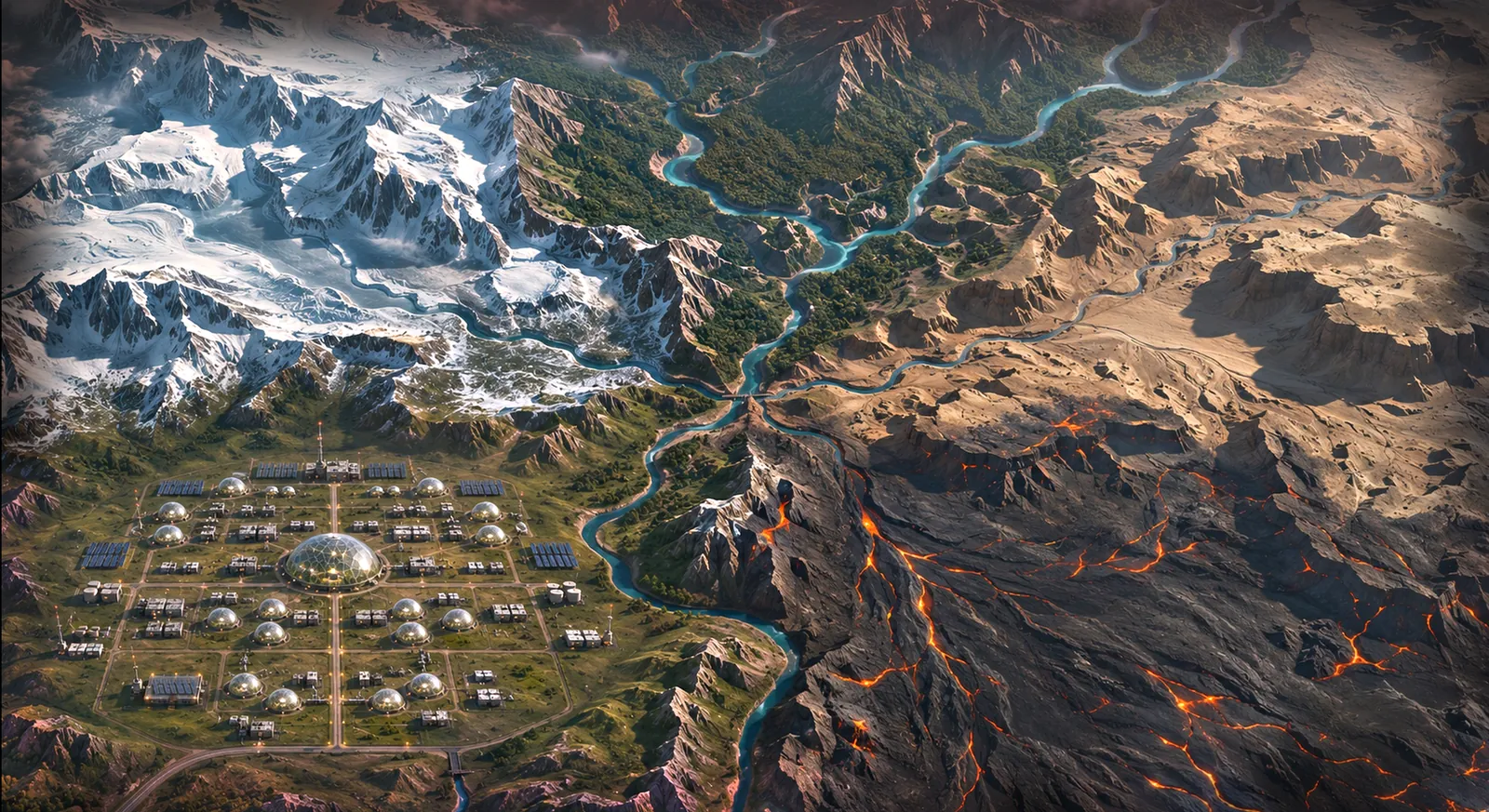
09 Weather
Watch a storm cross
Drag sideways to run time. Tap to read the air.
- Altimeter
- 29.92 inHg
- Wind here
- 6 mph from 270°
- Cooled by the low
- None
- The clock
- Day 125.0
Weather on the war map is not rolled grid by grid. One storm lies over five or six grids at once and takes days to cross, and every pilot sees the same sky, because the systems are worked out from the clock every machine shares.
The arithmetic
Four pressure systems at a time cross the map from west to east, each about 240 km across, and each takes five days to cross. The map is about 650 by 500 km, its grids 50 km apart.
- Pressure. A low drops the altimeter by 0.30 to 0.90 inHg. A high raises it by 0.15 to 0.45.
- Wind. It turns counter-clockwise round a low and clockwise round a high, strongest on the slope between, up to 26 mph on top of a steady 6 mph westerly.
- Temperature. It follows the season and the hour. A passing low cools the air by up to 14 °F and damps the swing between day and night, the way cloud does.
- Rain, snow, fog. Rain or snow is the temperature's call. Fog forms in calm air in the early morning and burns off by nine.
The motes are drawn far faster than the wind, or a storm would not seem to move at this scale. The systems shown are one season's by the game's formula, not today's.
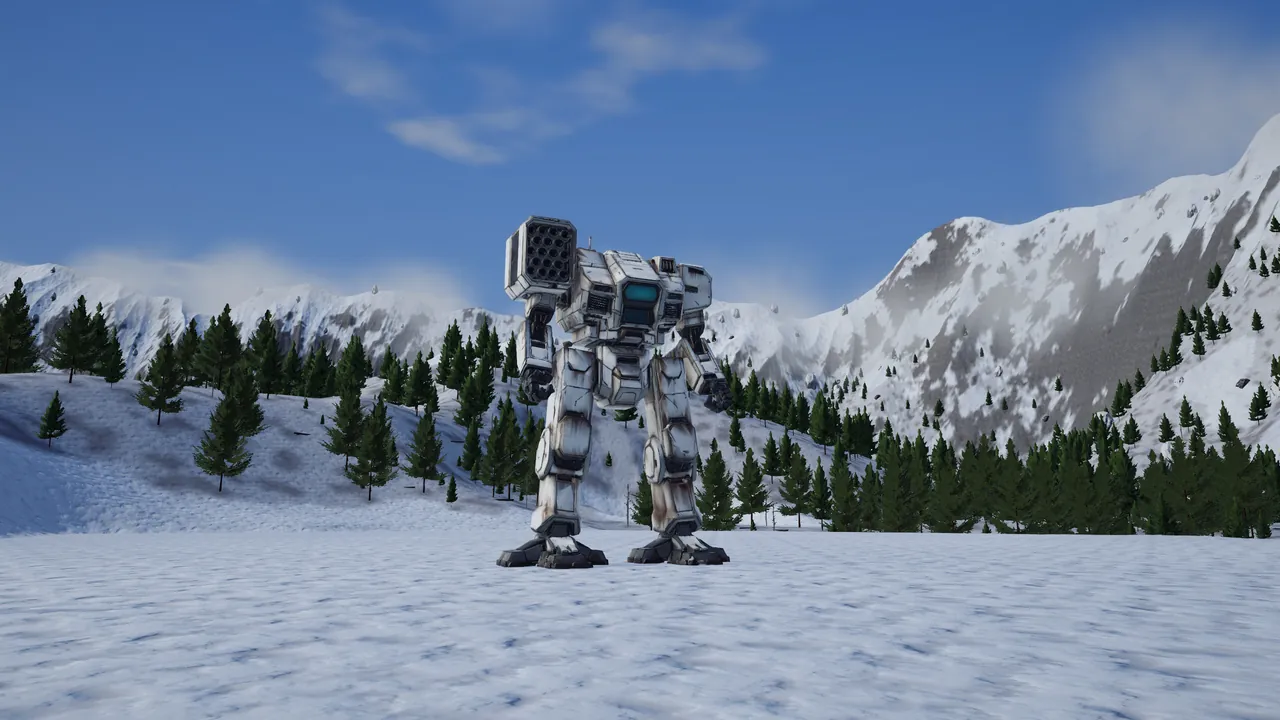
10 Thin air Modeled now · coming to the cockpit
Go high
Move the pin: higher, hotter, thinner.
- Standing at
- −1,002 ft
- Air
- 50 °C
- Flying at
- +2,960 ft
This air behaves 3,962 ft higher than you stand.
Every grid on the war map already knows its air. When that reaches the cockpit, thin air will cut the jets' thrust, make cooling worse and lower the weight you can carry, so the best loadout depends on where you are dropping this week.
The arithmetic
Pressure altitude = elevation + (29.92 − altimeter) × 1,000 ft
Density altitude = pressure altitude + 120 × (air temperature − standard) ft
- A desert basin, winter, 0 °C
- −3,040 ft 1,000 ft below MSL: thick air, and the basin pays
- The same basin, summer, 50 °C
- +2,960 ft standing below MSL, flying more than half a mile up
Worked on a standard-pressure day. The motes are a picture of the idea, not a measured density.

11 The crossing
Thirty-two years at 0.130 c
Slide the ship. Then race it to the Moon.
- Now
- Coast, engines quiet
- Speed
- 0.130 c 38,973 km/s
- From Earth
- 16.4 years out
- Clocks aboard run behind by
- 50 days
9.9 s There. You just crossed 384,400 km at cruise.
The Archive burned at one gravity for 46 days, then its engines went quiet. The coast lasts 32 and a half years, and a second burn, 46 days again, brings it into orbit over The Reach.
The arithmetic
- Why 46 days. At one gravity, reaching 0.130 c takes 46.3 days of burn by relativity's own arithmetic.
- Slower clocks. At that speed time aboard runs 0.85% slower than on Earth. Every date the Archive keeps is Earth's.
- Speeds do not simply add. The faster ship that left the Archive flew at 0.25 c by Earth's reckoning. Launched from a ship already doing 0.130 c, it needed 0.124 c more, not 0.120.
Burn time = (c ÷ g) × artanh(v ÷ c)
Relative speed = (u − v) ÷ (1 − uv ÷ c²)
The track draws each burn far wider than it is: together they are under 1% of the trip.
The numbers are on the page. The weight is in the cockpit.
Every game figure here is the one the game runs with. Pre-alpha: they move as the game is tuned. The pictures of the land are from the game; the porthole is not.